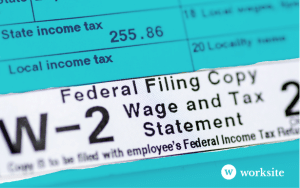

One of the most important responsibilities for any employer is understanding how to properly classify their workforce.
Whether someone is a W-2 employee or a 1099 independent contractor is more than just a paperwork detail—it’s a legal distinction that can carry significant financial and compliance implications. Misclassifying employees, even unintentionally, can lead to penalties, back taxes, and costly legal disputes.
At Worksite, we’re committed to helping businesses navigate these nuances with confidence. Here’s a clear and accessible guide to understanding the key differences between W-2 employees and 1099 independent contractors.
1. Employment Status
W-2 Employee: Officially on your company’s payroll. You control what tasks they do and how, when, and where they do them.
1099 Independent Contractor: Operate independently, usually under contract, and decide how they complete the work.
2. Tax Responsibilities
W-2 Employee: You must withhold income, Social Security, and Medicare taxes and pay a matching portion.
1099 Independent Contractor: Responsible for their own taxes, including the self-employment tax. You issue a 1099-NEC.
3. Control Over Work
W-2 Employee: You direct workflows, require hours, provide training, and supply tools.
1099 Independent Contractor: They set their own hours, use their own tools, and control how they complete tasks.
4. Eligibility for Benefits
W-2 Employee: Usually eligible for health insurance, retirement plans, and other company benefits.
1099 Independent Contractor: Not eligible for employer-sponsored benefits and must secure their own.
5. Reporting and Tax Forms
W-2 Employee: You issue Form W-2 and file Form W-3 with the SSA.
1099 Independent Contractor: You issue Form 1099-NEC and file Form 1096 with the IRS.
6. Termination Protocols
W-2 Employee: Must comply with federal/state labor laws, including final paychecks and unemployment eligibility.
1099 Independent Contractor: Usually governed by contract terms, with fewer legal formalities for ending the relationship.
7. Payroll Taxes and Insurance
W-2 Employee: Employers must pay unemployment insurance, workers’ comp, and payroll taxes.
1099 Independent Contractor: Handle their own taxes, including the full 15.3% self-employment tax.
IRS Guidelines for Determining Worker Classification
The IRS uses three key factors to assess classification:
- Behavioral Control: Does the employer direct how the work is done?
- Financial Control: Who manages the business side—pay, expenses, reimbursements?
- Type of Relationship: Is there a contract? Are benefits offered? Is the work integral to the business?
No single factor is decisive—it’s the total relationship that matters.
Risks of Misclassification
Misclassifying workers can result in:
- Back taxes and unpaid FICA contributions
- Penalties and interest
- Unpaid benefits liabilities
- Legal fees and litigation
Why It Matters for Your Business
At Worksite, we tailor our support to each client’s structure. We help you classify correctly, avoid costly risks, and adapt as you grow.
If you’re uncertain about a worker’s status, talk with one of our HR experts to get clarity and stay compliant.
Need Help Navigating Worker Classification?
Worksite specializes in simplifying HR and compliance. Let us help you manage your workforce the right way—from payroll to policy.